 Click to enlarge
Settings & Characters
The scholarship groundwork: five annotated model settings, two bonus settings and five model characters, each with the blueprint behind it.
- The four-paragraph method and the sentence toolkit
- A seven-step setting blueprint and a character blueprint
- Five annotated model settings, two bonus settings and five model characters
- A sentence map showing how each model was built
- Setting and character checklists
Want the whole series? The full Creative Writing series is £129, under £17 a book.
How this book is used in our course
Learn one model at a time. Read it aloud, study its sentence map, then write it from memory and compare. Once it is secure, adapt it: change the mood dial, the season or the time of day to fit a practice title. By the exam, every setting and character is ready to bend to whatever title appears.
Where it sits in the series
- Previous book in the series: Book 2, Your Writing Toolkit
- Next book in the series: Book 4, Settings & Characters: Model Descriptions
What's inside Creative Writing Mastery 3
Four real pages from the book, so you can see exactly what your child will work from. All 8 sample pages are in the viewer.
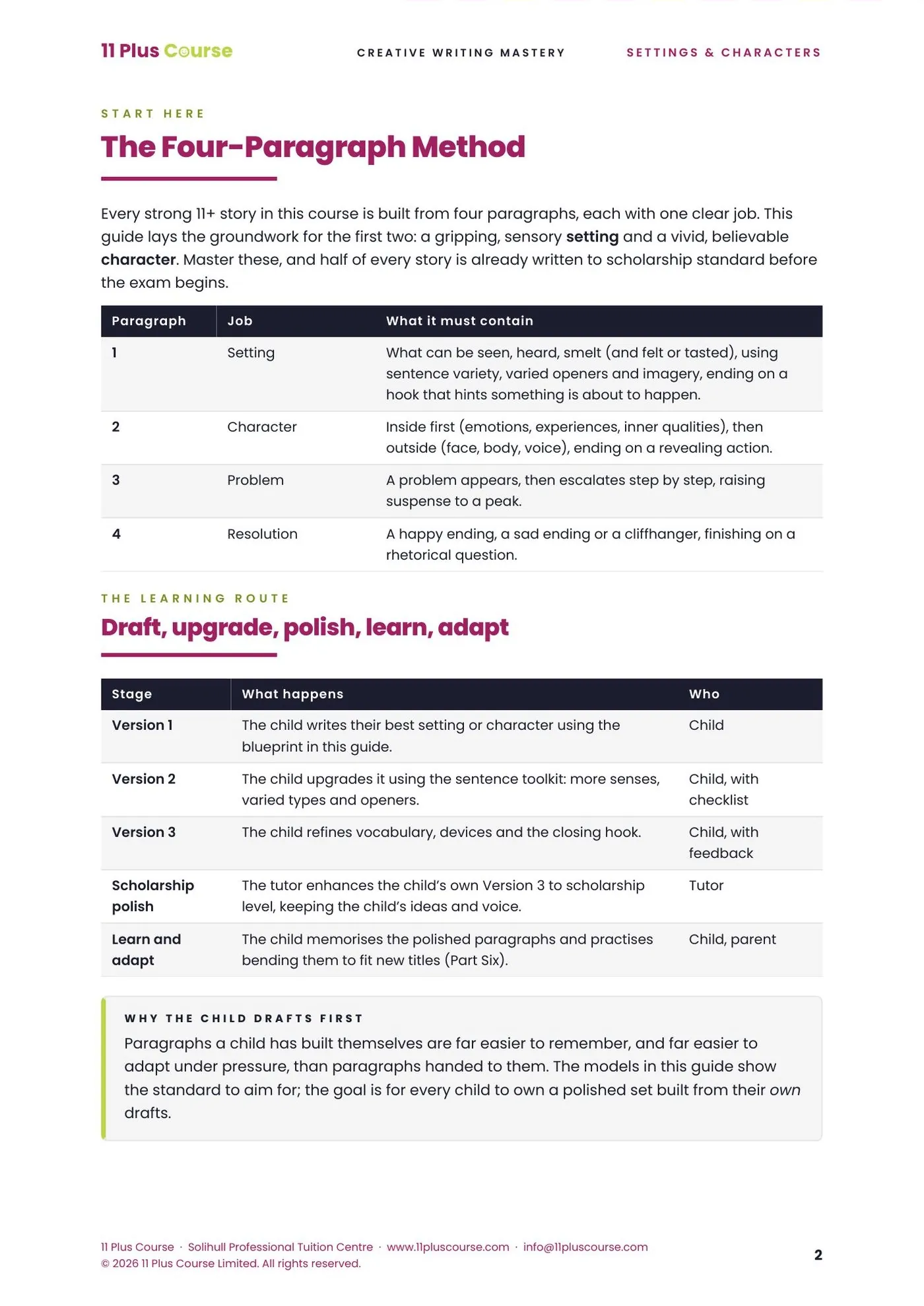
Master the first two paragraphs and half of every story is written before the exam begins.
Every story is four paragraphs, each with one clear job. This book lays the groundwork for the first two: a gripping, sensory setting and a vivid, believable character, both built to scholarship standard. Learn them, adapt them to the title on the day, and the child walks in with the opening half already secure.
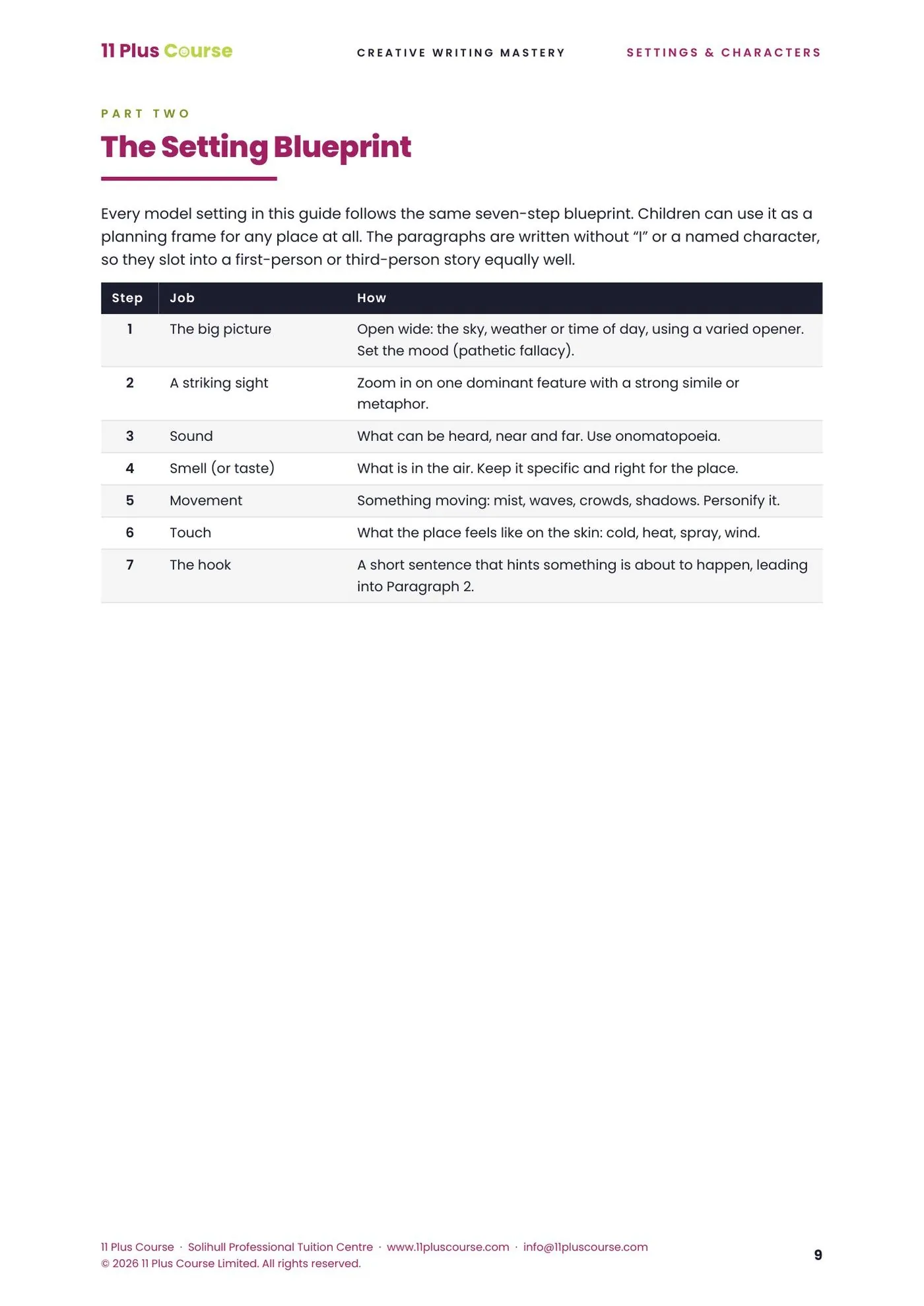
Seven steps that build a setting for any place at all.
Open wide on the sky, weather or time of day and set the mood. Zoom in on one striking sight with a strong image. What can be heard, near and far. What is in the air. Then touch, then the hook. Written without "I" or a named character, so every model slots into a first-person or third-person story.
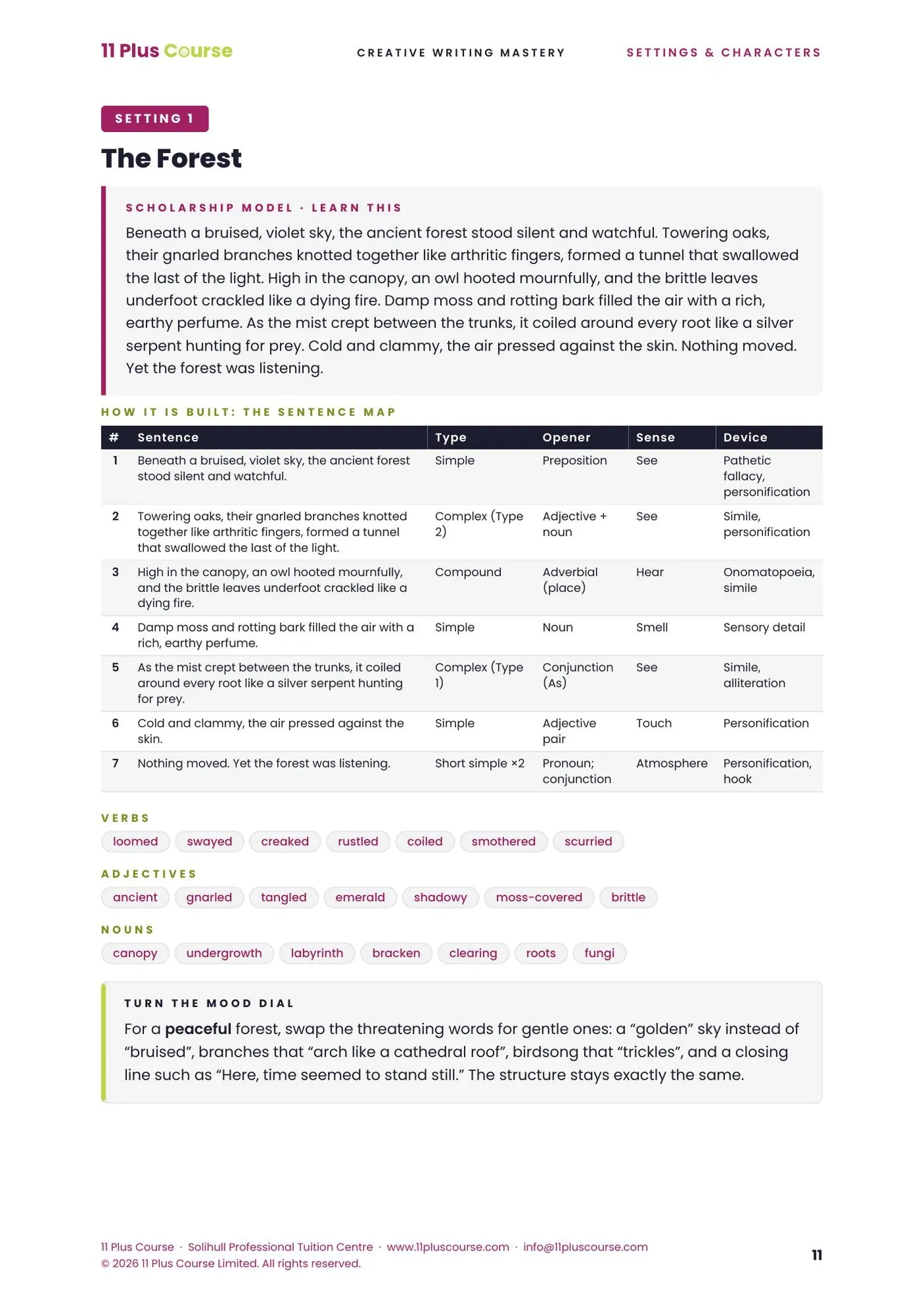
A scholarship model, then the sentence map that shows exactly how it was built.
"Beneath a bruised, violet sky, the ancient forest stood silent and watchful." Then every sentence of the model broken down: its type, its opener, the sense it uses and the device it carries. Banks of verbs, adjectives and nouns for the place, and a mood dial that turns the same forest from threatening to peaceful. A child learns the model, then learns how to make their own.
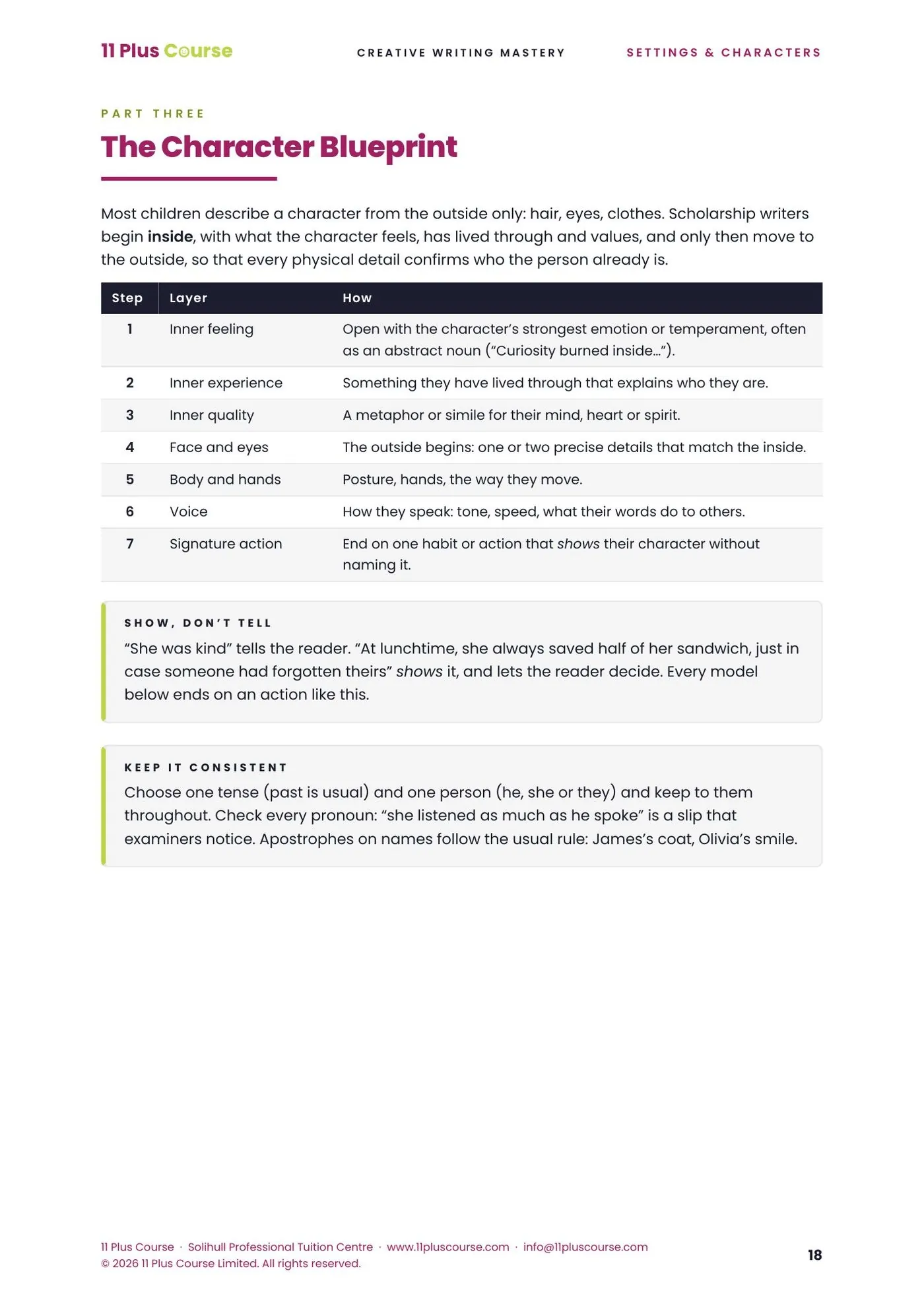
Most children describe hair, eyes and clothes. Scholarship writers start inside.
Inner feeling, inner experience, inner quality, then face and eyes, then appearance and movement, then a signature line that sets up a story. Because the inside comes first, every outside detail confirms who the person already is. It is the difference between a description and a character.
All 12 model settings and characters in the book follow the pattern shown here.
Other Year 4 & 5 books in Creative Writing Mastery

The Technique Booklet
The complete Writing Formula in more than 380 pages: plan in five minutes, write four paragraphs, check your own work, then every other kind of task.

Your Writing Toolkit
Every checklist, every mistake to avoid, the glossary and seven templates, open beside every piece of writing.

Settings & Characters: Model Descriptions
Ten short model paragraphs to read, learn and adapt: five settings and five characters.

6-Minute Drills
Every setting and character written against the clock, marked out of 10, then redrafted to scholarship standard.