 Click to enlarge
The 11+ Question Types Guide: English Comprehension
Seventeen comprehension question types: how to spot each, what the examiner wants, the method, and real past-paper examples.
- 17 comprehension question types, each with how to spot it, what the examiner wants and the method
- Real independent-school past-paper examples and the traps that cost marks
- The three levels of question and the one-mark-one-point rule
- The Answer Formula for every long answer
- A readiness checklist before timed past papers
Want the whole series? The full Creative Writing series is £129, under £17 a book.
How this book is used in our course
Teach the question types one at a time, starting with Find It, then Think It, then Judge It. For each, practise spotting it, then answer the worked example using the method before reading the model. Use the Answer Formula for every answer worth more than two marks. Start timed past papers only when every line of the readiness checklist has two ticks.
Where it sits in the series
- Previous book in the series: Book 6, SHAMPOOP Plus Literary Devices Handbook
- Next book in the series: Book 8, The Scholarship Interview Guide
What's inside Creative Writing Mastery 7
Four real pages from the book, so you can see exactly what your child will work from. All 8 sample pages are in the viewer.
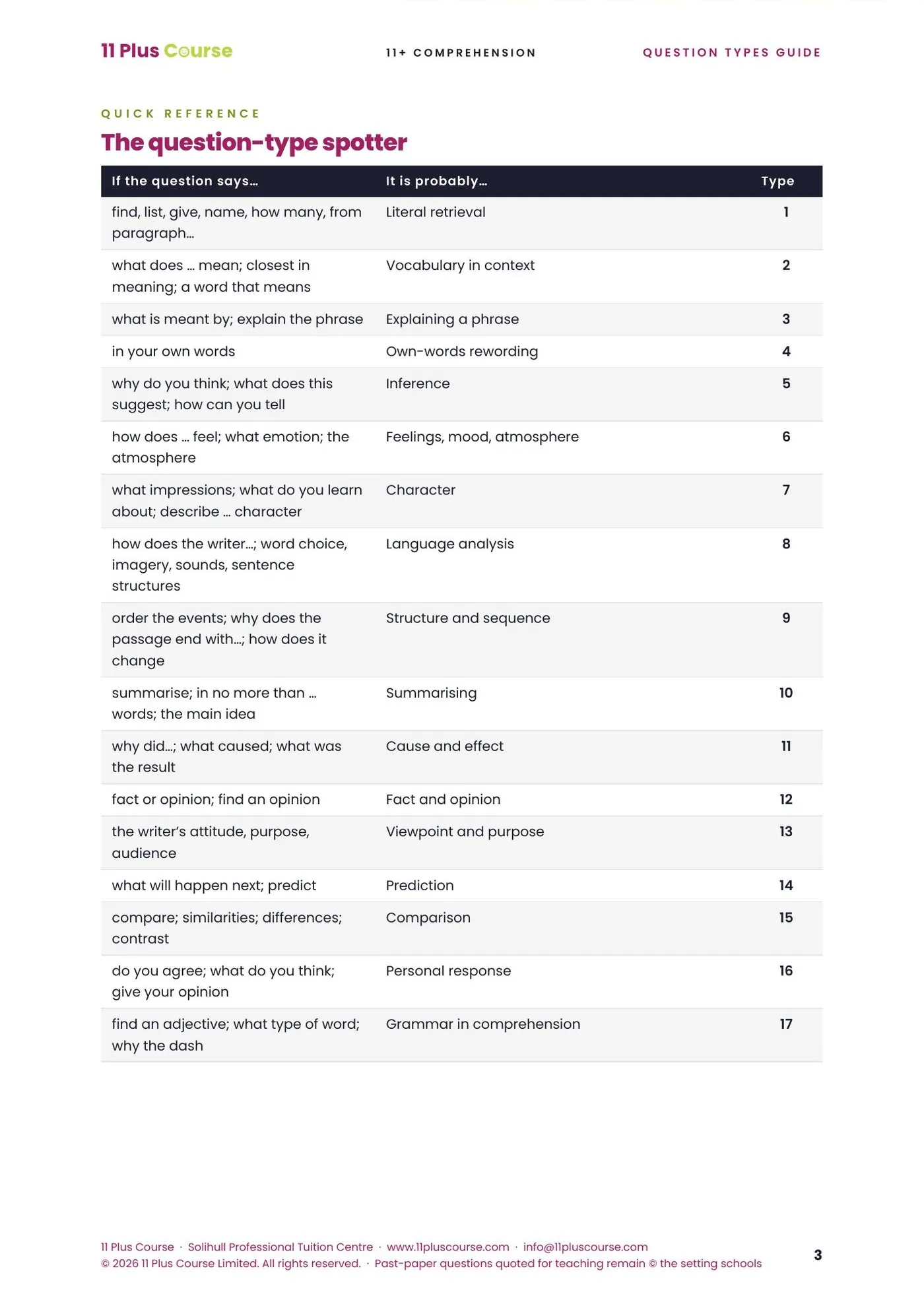
Seventeen question types, and the words in the question that give each one away.
"Find, list, give, how many" is literal retrieval. "In your own words" is own-words rewording. "Why do you think, what does this suggest" is inference. "How does the writer…" is language analysis. A child who can name the type of question already knows where to look and what kind of answer earns the marks.
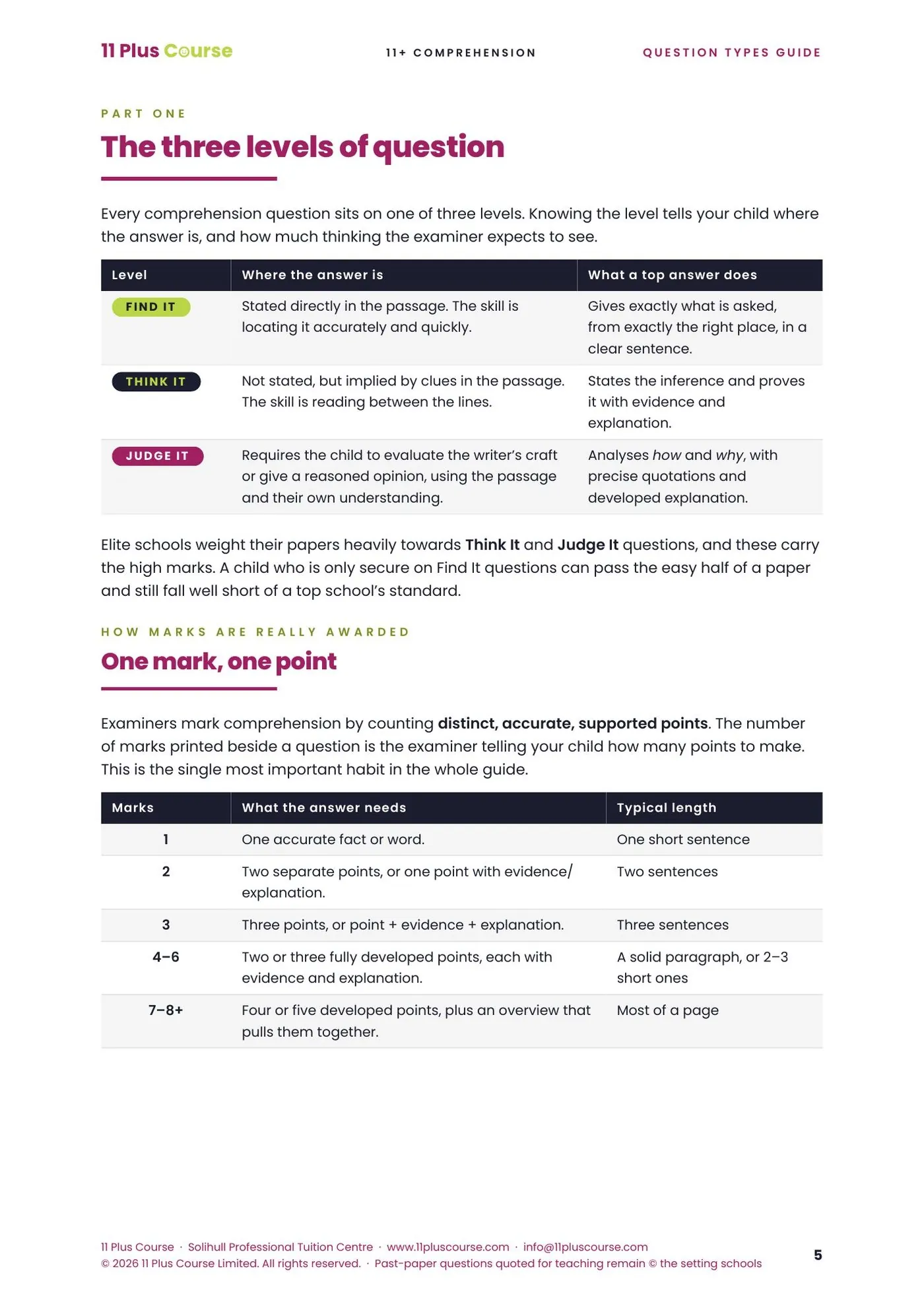
Find It, Think It, Judge It: and why the marks are in the last two.
Find It answers are stated in the passage. Think It answers are implied by clues. Judge It answers evaluate the writer's craft. Elite schools weight their papers towards Think It and Judge It, so a child secure only on Find It can pass the easy half of a paper and still fall short. Then the habit the whole guide rests on: one mark, one point.
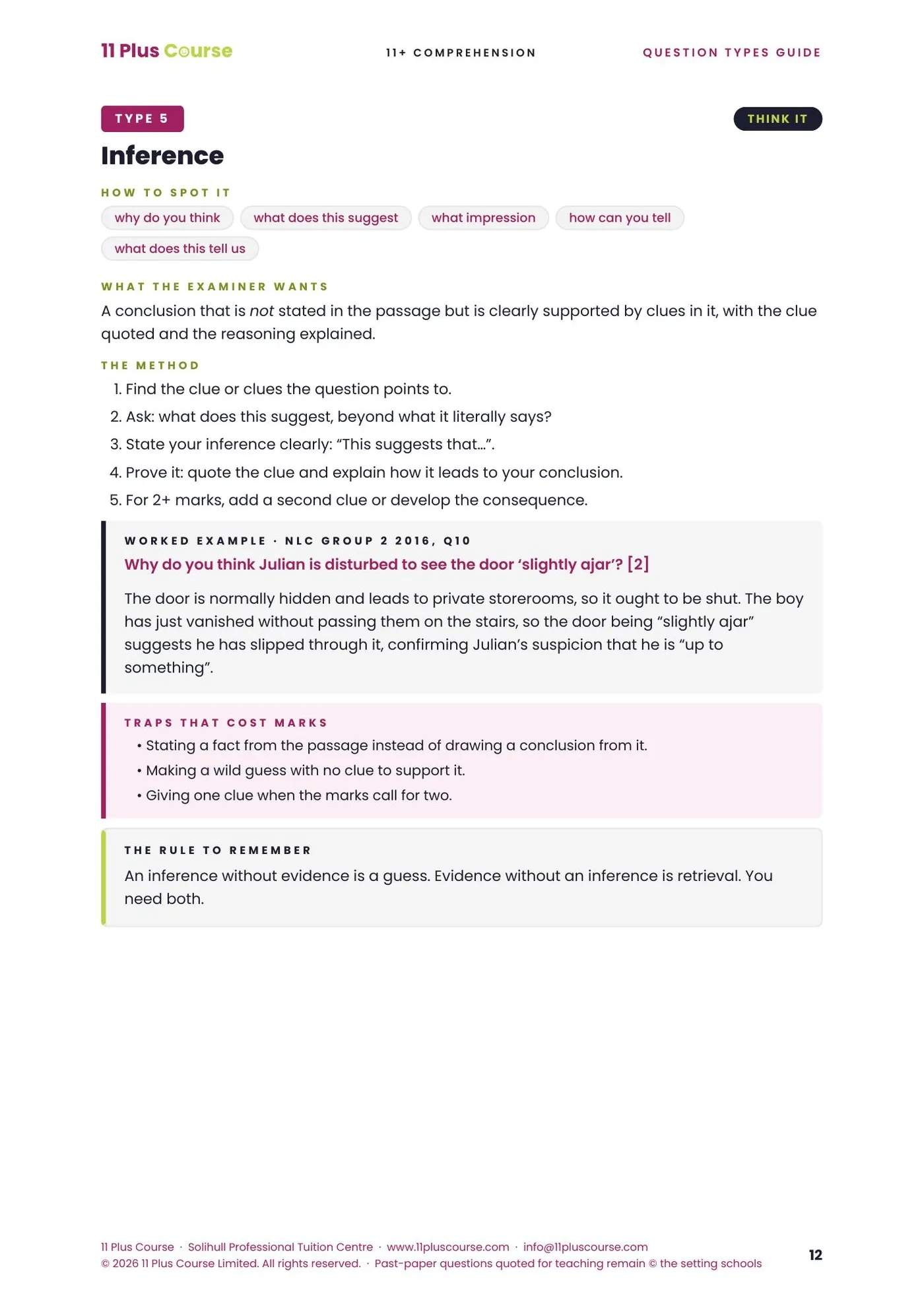
An inference without evidence is a guess. Evidence without an inference is retrieval.
Find the clue, ask what it suggests beyond what it says, state the inference, prove it with the quotation, and add a second clue for two marks. Then a worked answer to a real independent-school past-paper question, and the traps that cost marks: stating a fact instead of a conclusion, a guess with no clue, one clue when the marks call for two.
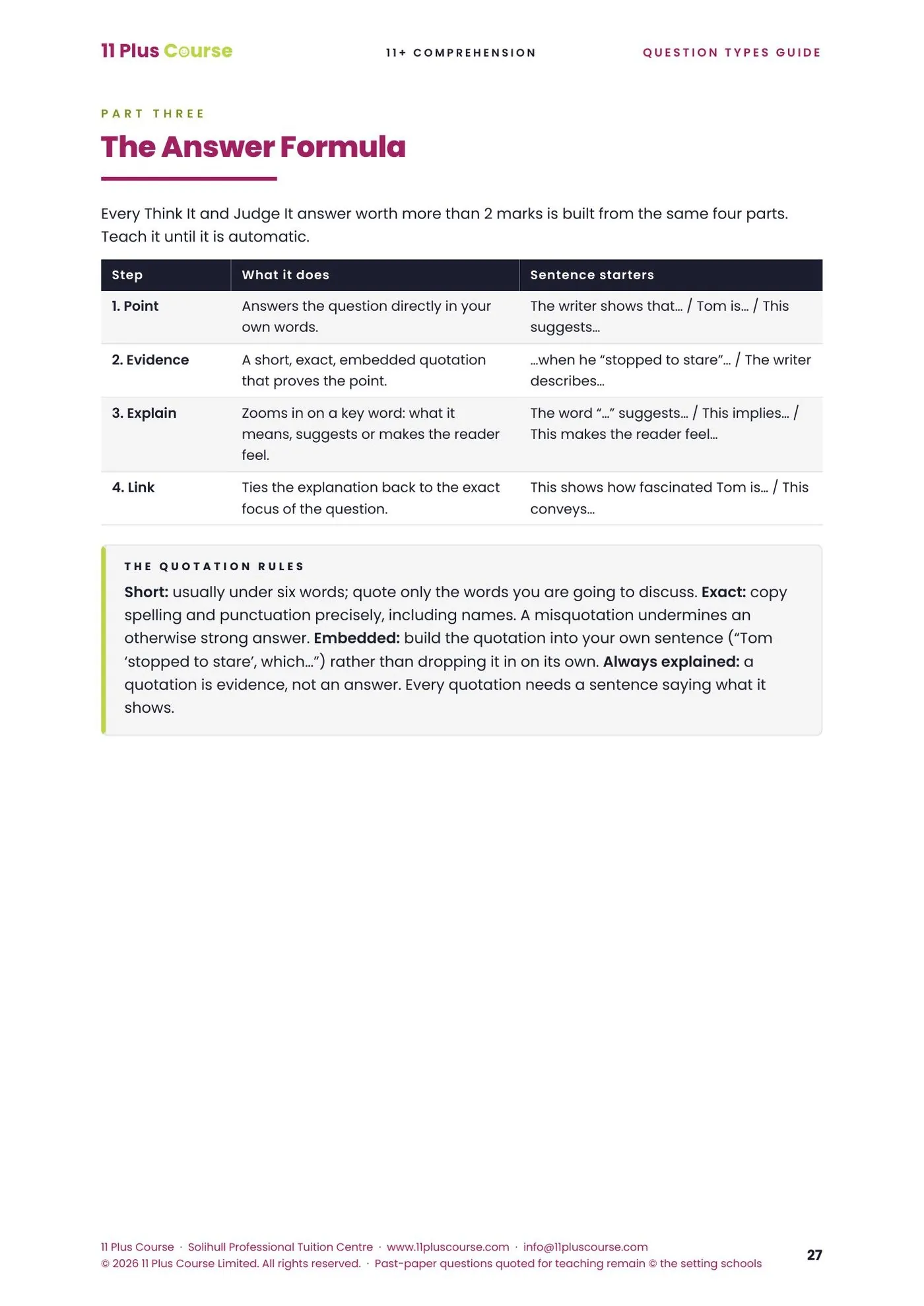
Point, evidence, explain, link: every answer worth more than two marks.
Answer the question in your own words. Prove it with a short, exact, embedded quotation. Zoom in on a key word and what it suggests. Tie it back to the exact focus of the question. With sentence starters for each step, practised until it is automatic.
All 17 question types in the book follow the pattern shown here.