 Click to enlarge
Comprehension Techniques 3
The comprehension techniques book: inference, authorial intent and long answers. Carries through to GCSE.
- 10 weeks in the book
- Original and classic passages, written or adapted for the book
- Full answer key, independently re-checked question by question
Want the whole series? The full English series is £497, under £19 a book.
How this book is used in our course
English books are worked in short daily sessions rather than one long sitting. For vocabulary, the child covers the meaning, says it aloud, then checks; words that are missed go on a card for the week. For comprehension and cloze, the child attempts the passage under a loose time, then marks against the key and rewrites any answer that lost marks. The techniques in it carry through to GCSE English and beyond.
Where it sits in the series
- Previous book in the series: Book 17, Vocabulary 4 – CEM & GL
- Next book in the series: Book 19, Inference Comprehension 1
What's inside English Mastery 18
Five real pages from the book, so you can see exactly what your child will work from. All 10 sample pages are in the viewer.
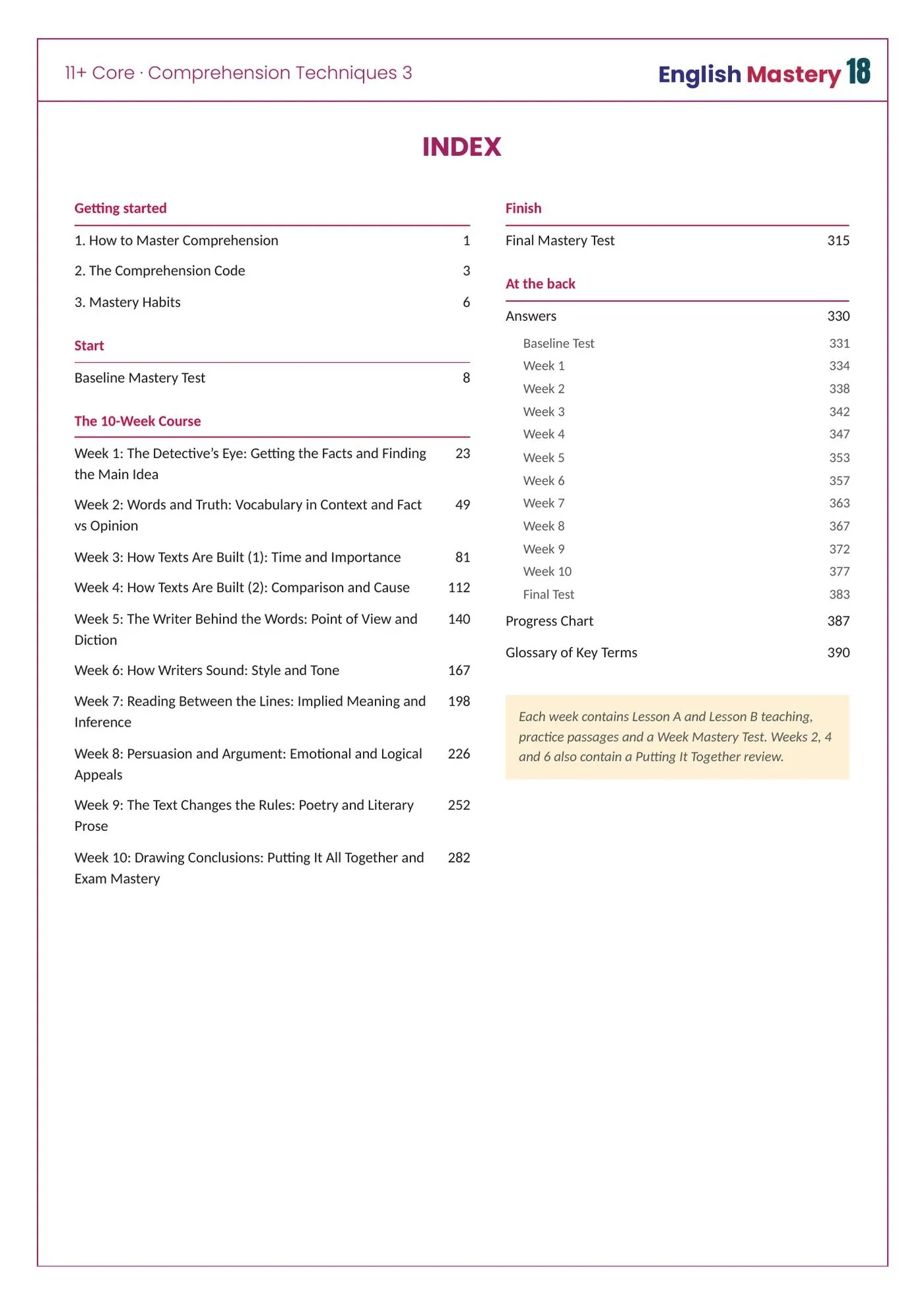
A ten-week comprehension course, with a Baseline Test at the start and a Final Mastery Test at the end.
Week 1, the Detective’s Eye. Week 2, vocabulary in context and fact versus opinion. Weeks 3 and 4, how texts are built. Week 5, point of view and diction. Week 6, style and tone. Week 7, implied meaning and inference. Week 8, persuasion. Week 9, poetry and literary prose. Week 10, drawing conclusions and exam mastery. Each week has two lessons, practice passages and a Mastery Test. This is the comprehension method we use from 11+ through to GCSE.
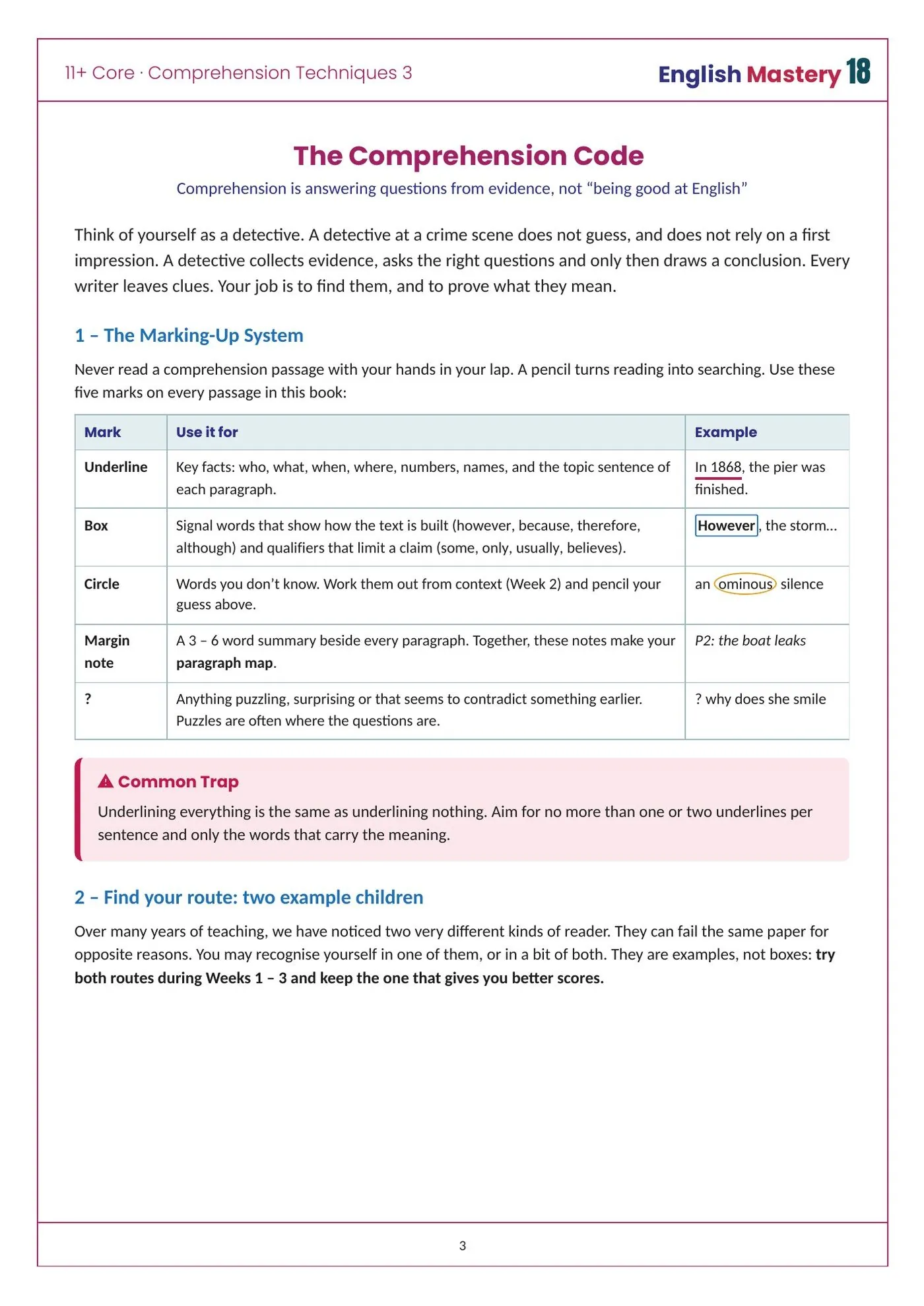
Comprehension is answering questions from evidence, not being good at English.
Think like a detective: collect evidence, ask the right questions, then conclude. The Marking-Up System gives a child five mark-up symbols for every passage: underline key facts, box the signal words and qualifiers (however, because, only, usually), circle unknown words, write a three-to-six-word note beside each paragraph, and put a question mark by anything puzzling. A pencil turns reading into searching.
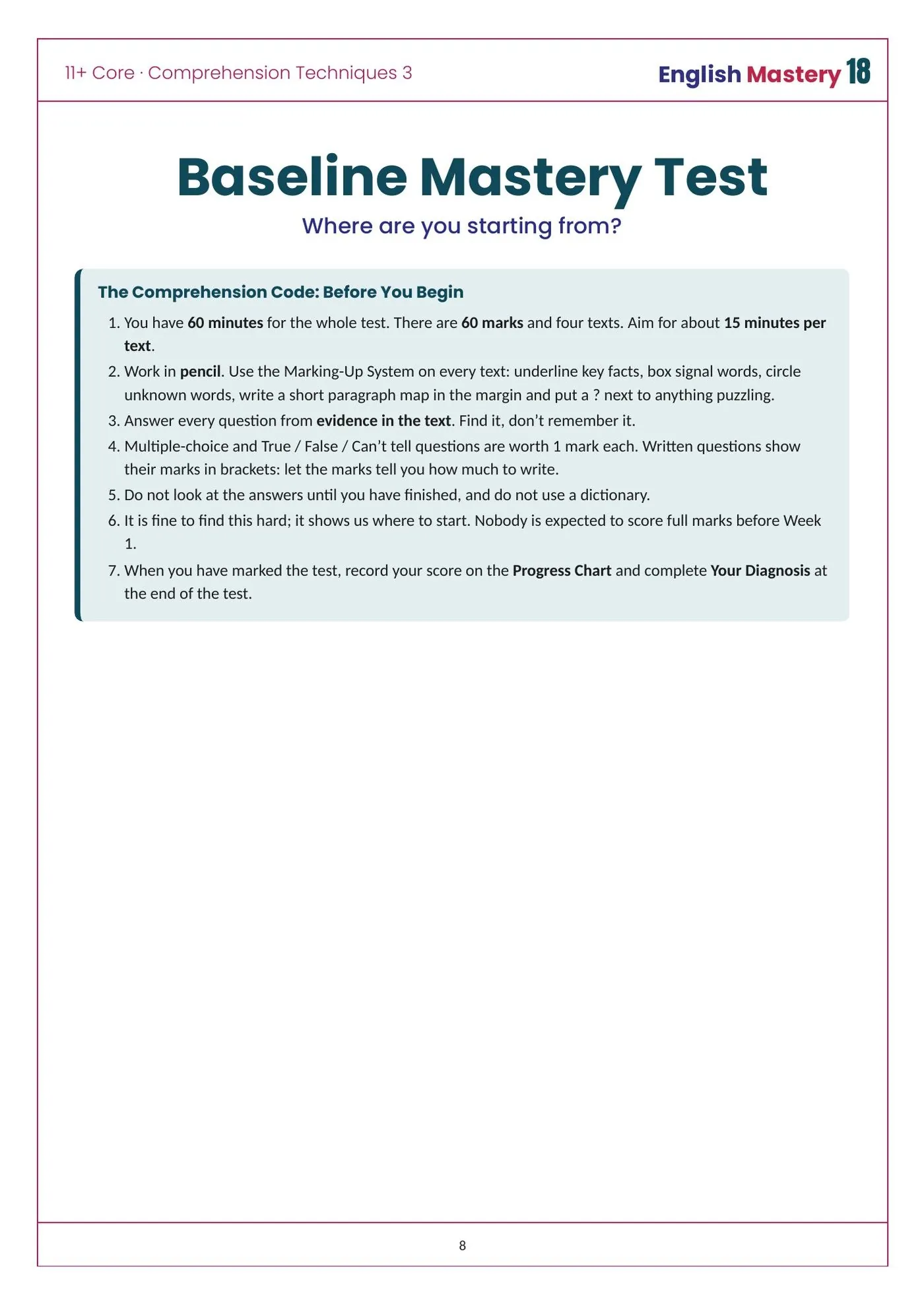
Sixty minutes, sixty marks, four texts: find out where your child starts before the course begins.
The baseline runs under exam conditions, with the Marking-Up System on every text and every answer found from evidence. The answers tag every question with the week and skill it tests, so a parent circles the misses and sees immediately which weeks matter most for their child.
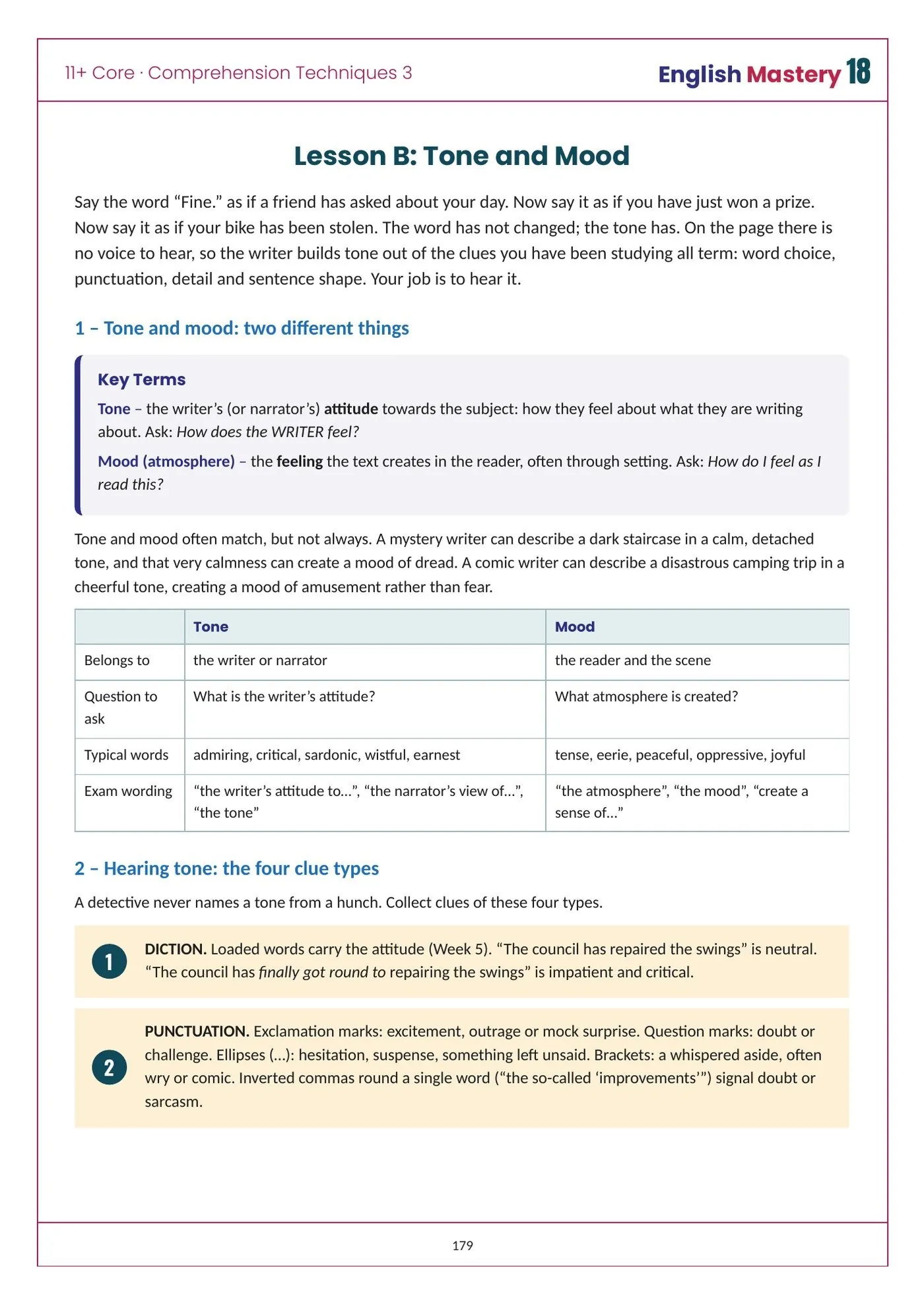
Say "Fine." as if you have just won a prize, then as if your bike has been stolen. The word has not changed; the tone has.
Each lesson teaches one skill with key terms set out plainly: tone is the writer’s attitude, mood is the feeling the text creates in the reader, and they do not always match. Then the clues a writer uses to build them, word choice, punctuation, detail and sentence shape, and practice passages to find them in. This is the vocabulary of a GCSE English answer, taught to a ten-year-old.
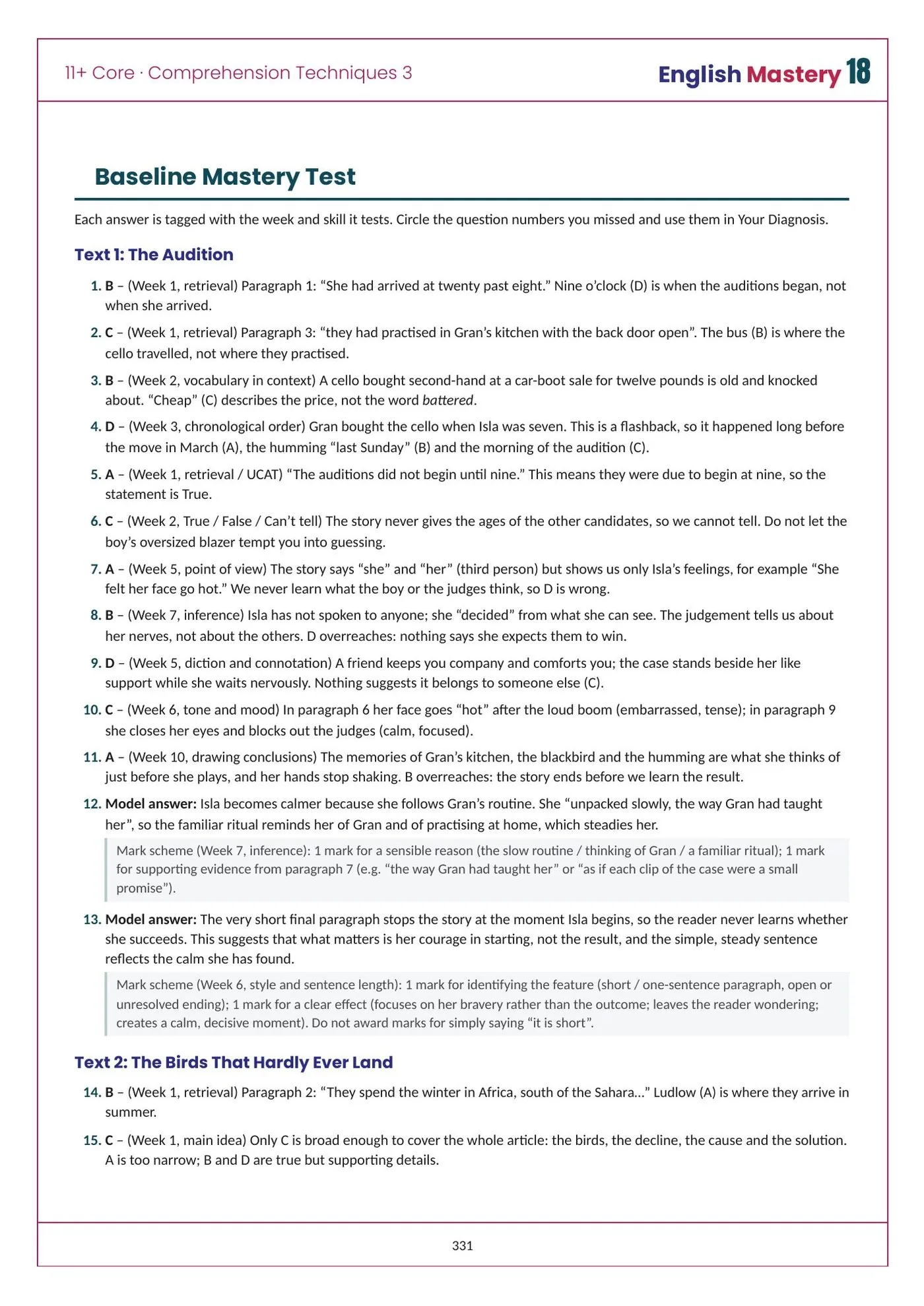
Every answer tagged with the week and skill it tests, and why the wrong answer is wrong.
"1. B (Week 1, retrieval). Paragraph 1: She had arrived at twenty past eight. Nine o’clock is when the auditions began, not when she arrived." A child sees the evidence, the skill and the trap in one line, and the diagnosis tells them which week to revisit.
All 10 weeks in the book follow the pattern shown here.
Other Year 4 & 5 books in English Mastery

English Rules 1 Testbook
Quizzes, tests and scorecards for every rule in English Rules 1.

Cloze Sentences 1
Fill-the-gap sentences that teach a child to read for sense, not just for words.

Shuffled Sentences 1
Rebuild scrambled sentences and spot the word that does not belong.

Comprehension 1
Retrieval and basic skills on fiction, poetry and non-fiction passages.