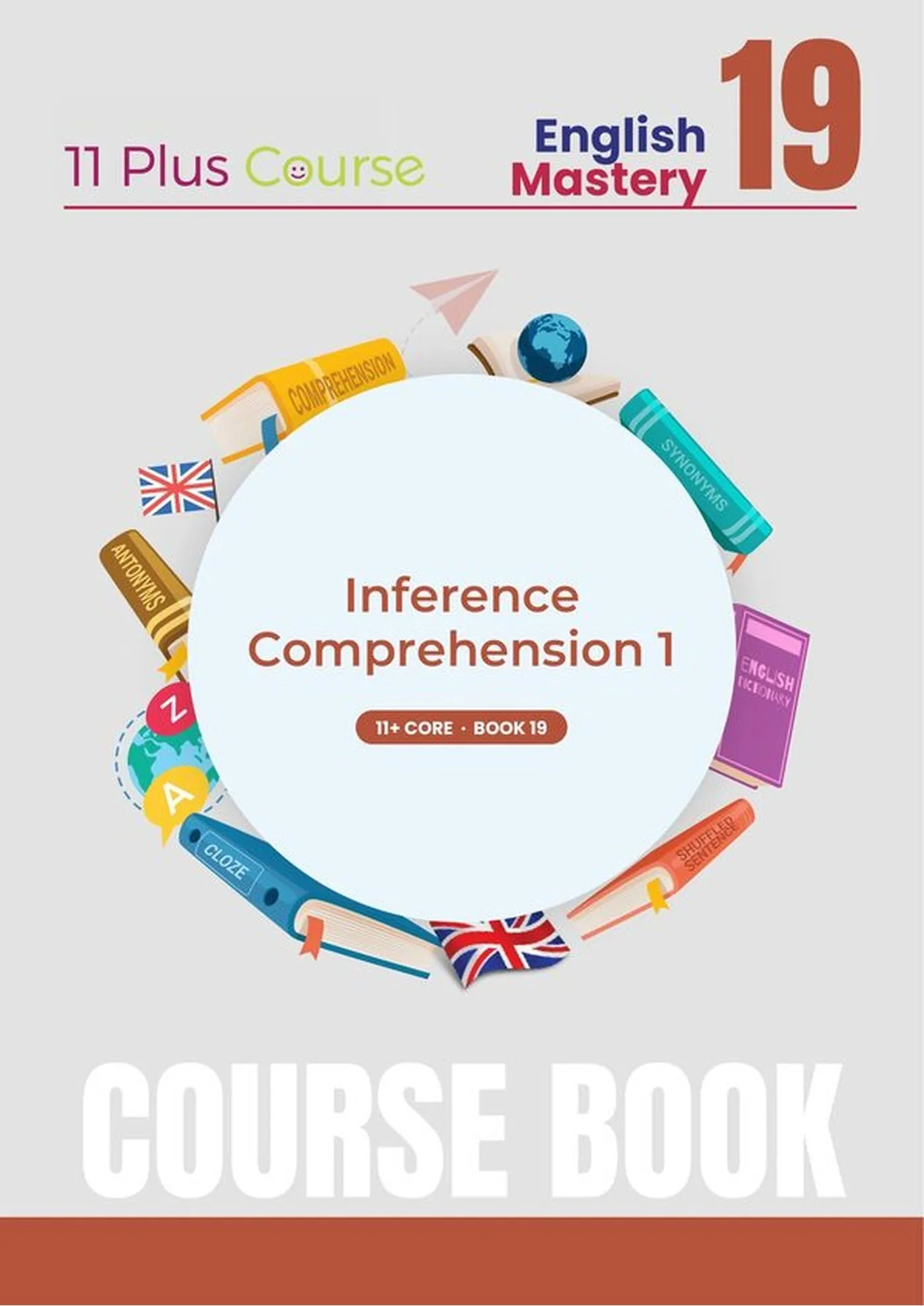
 Click to enlarge
Inference Comprehension 1
50 short inference drills, fiction and non-fiction, 10 marks each.
- 50 drills in the book
- Original and classic passages, written or adapted for the book
- Full answer key, independently re-checked question by question
Want the whole series? The full English series is £497, under £19 a book.
How this book is used in our course
English books are worked in short daily sessions rather than one long sitting. For vocabulary, the child covers the meaning, says it aloud, then checks; words that are missed go on a card for the week. For comprehension and cloze, the child attempts the passage under a loose time, then marks against the key and rewrites any answer that lost marks.
Where it sits in the series
- Previous book in the series: Book 18, Comprehension Techniques 3
- Next book in the series: Book 20, Vocabulary 1 Puzzle Book
What's inside English Mastery 19
Five real pages from the book, so you can see exactly what your child will work from. All 8 sample pages are in the viewer.
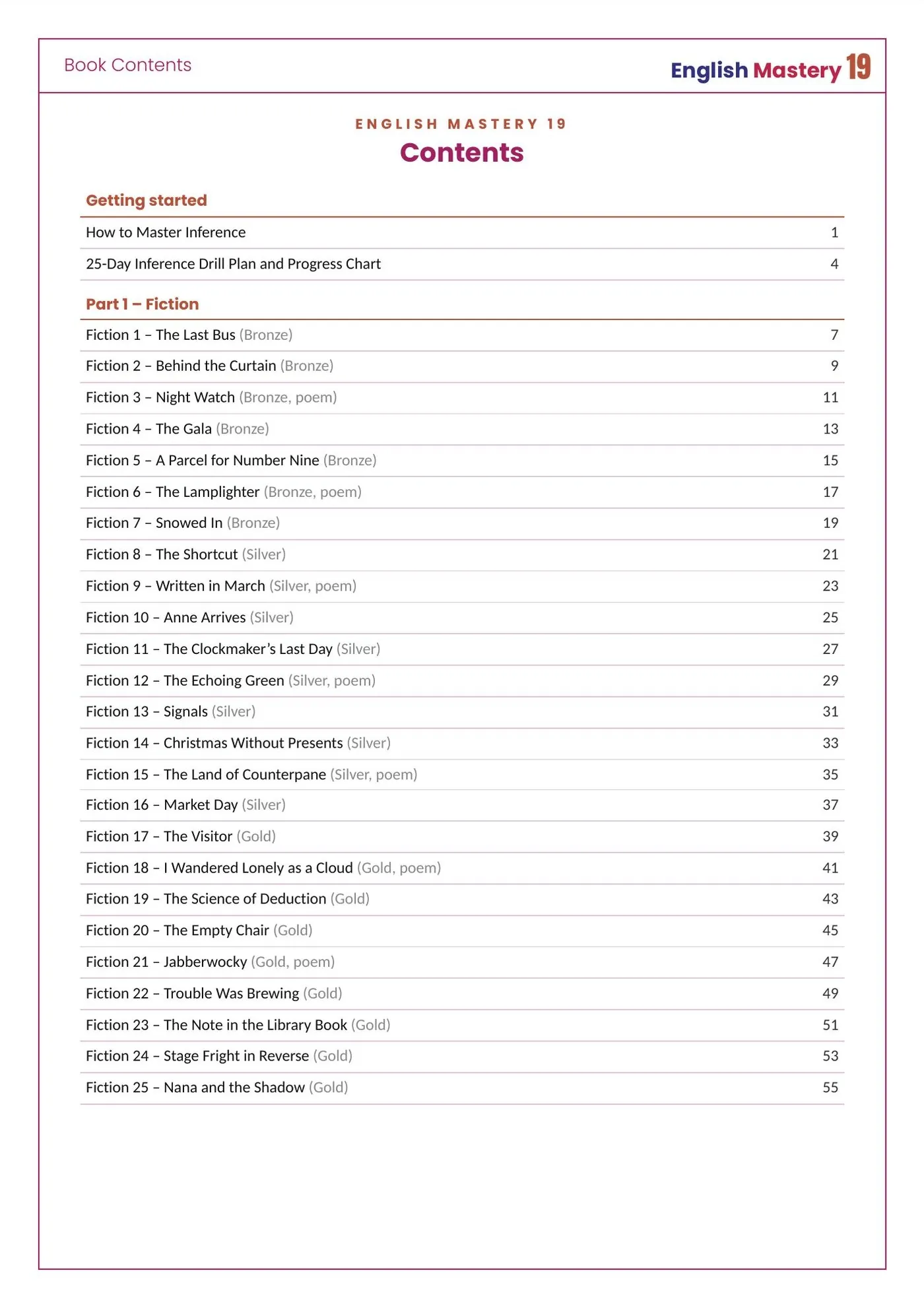
Fifty short inference drills, 25 fiction and 25 non-fiction, graded Bronze, Silver and Gold.
The Last Bus, Behind the Curtain, The Gala, Anne Arrives, The Clockmaker’s Last Day: one-page fiction texts written to be read between the lines. The non-fiction runs from hummingbirds to a lifeboat volunteer’s diary. Ten one-mark inference questions on each, so a child practises the skill that carries the most marks in independent school papers fifty times over.
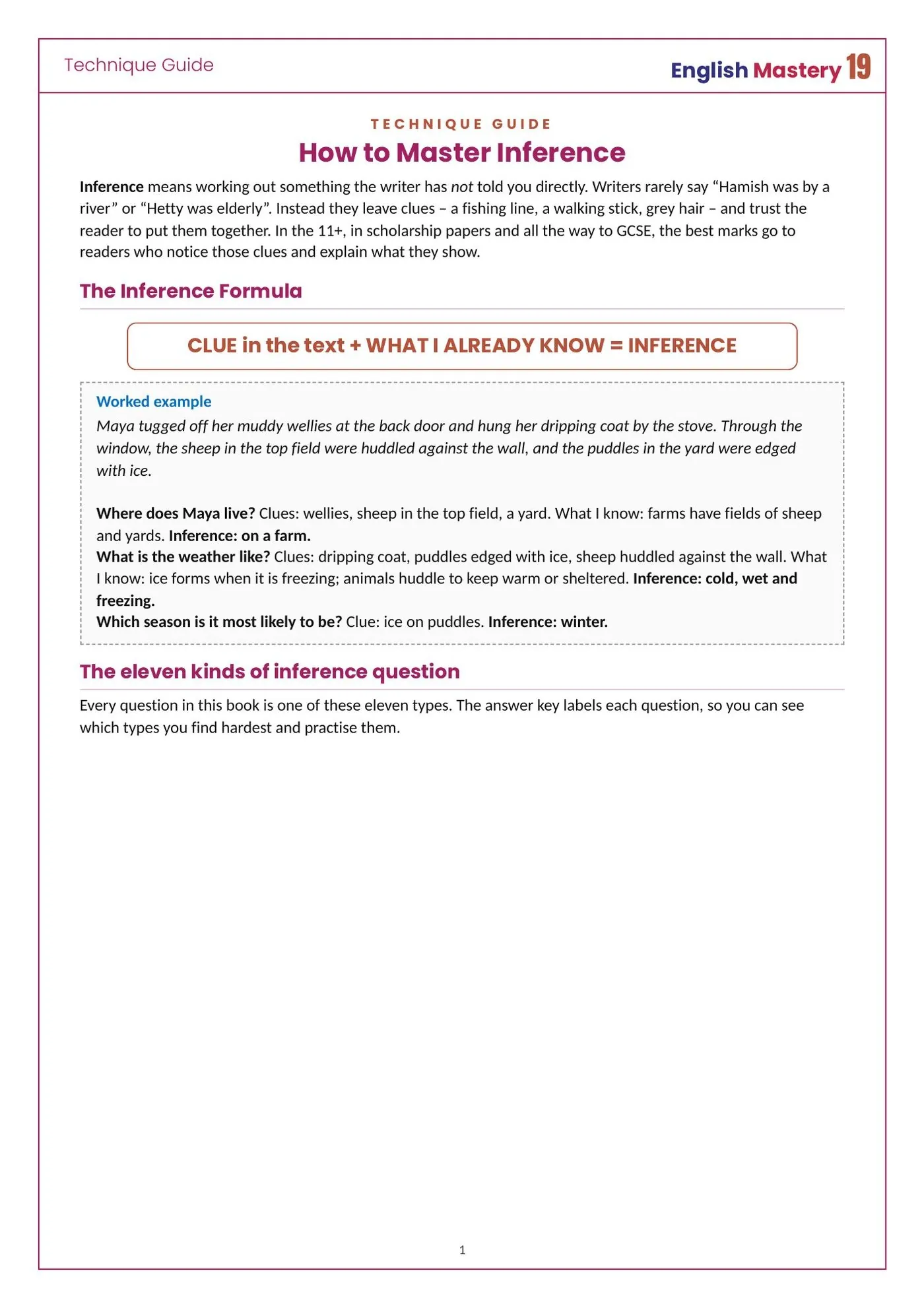
Clue in the text plus what I already know equals inference.
Writers rarely say "Hetty was elderly". They leave a walking stick and grey hair and trust the reader to put them together. The worked example shows how: Maya tugs off muddy wellies, the sheep in the top field are huddled against the wall, the puddles are edged with ice. Where does she live? What is the weather? Which season? Each answer is built from two or three named clues, which is exactly how the mark schemes reward it.
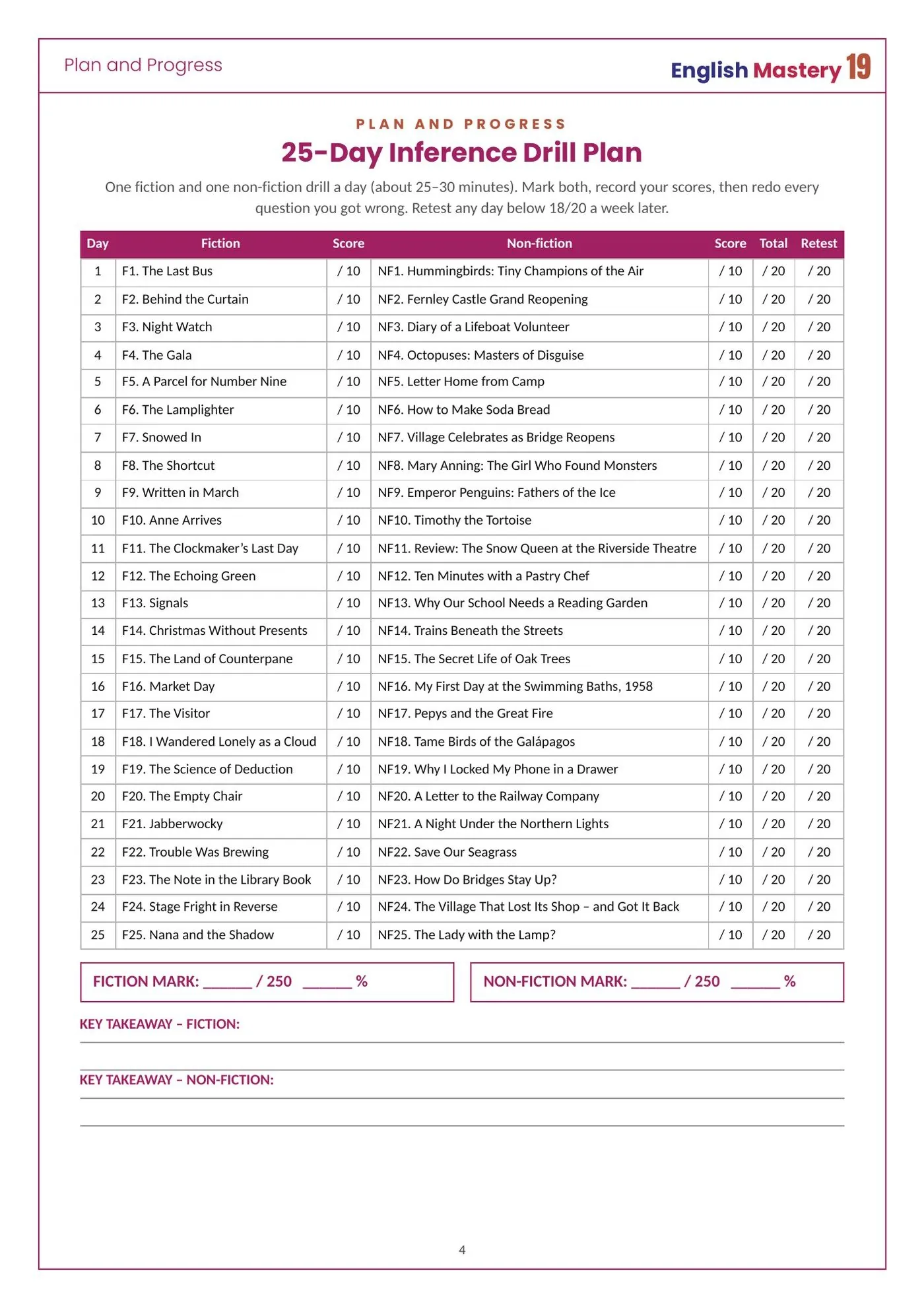
One fiction and one non-fiction drill a day, twenty-five minutes, retest anything under 18 out of 20.
The plan turns fifty drills into a five-week routine with a progress chart built in. Mark both, record the scores, redo every question you got wrong, and retest any day below 18/20 a week later. A parent knows exactly what to set each evening.
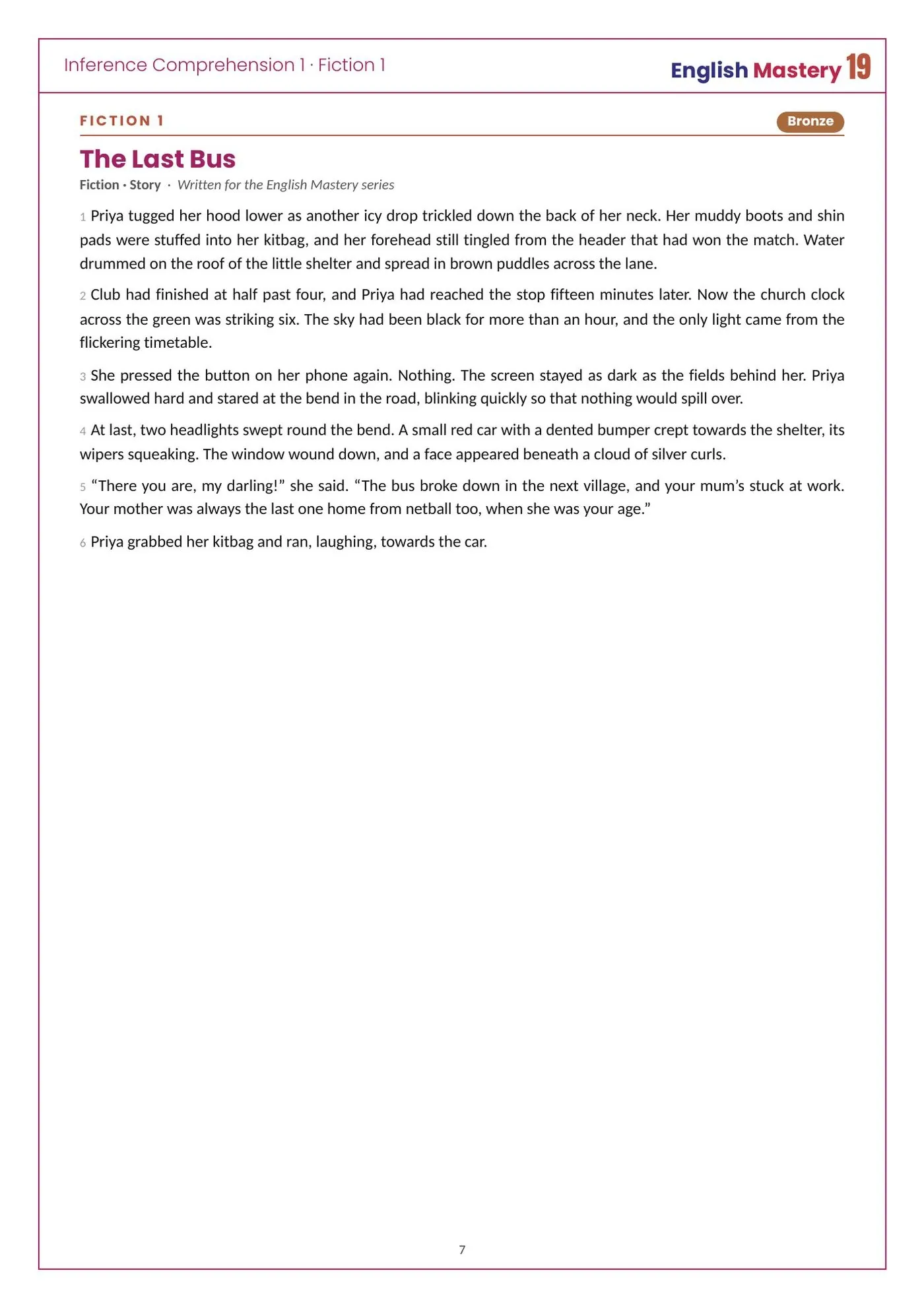
The Last Bus: a girl, a dead phone, and a church clock striking six.
Priya tugs her hood lower against the icy rain, her muddy boots and shin pads in her kitbag, her forehead still tingling from the header that won the match. Club finished at half past four; she reached the stop fifteen minutes later; the clock is striking six. Nothing in the passage says football, winter, countryside or frightened. Every one of the ten questions asks the child to prove it from the clues.
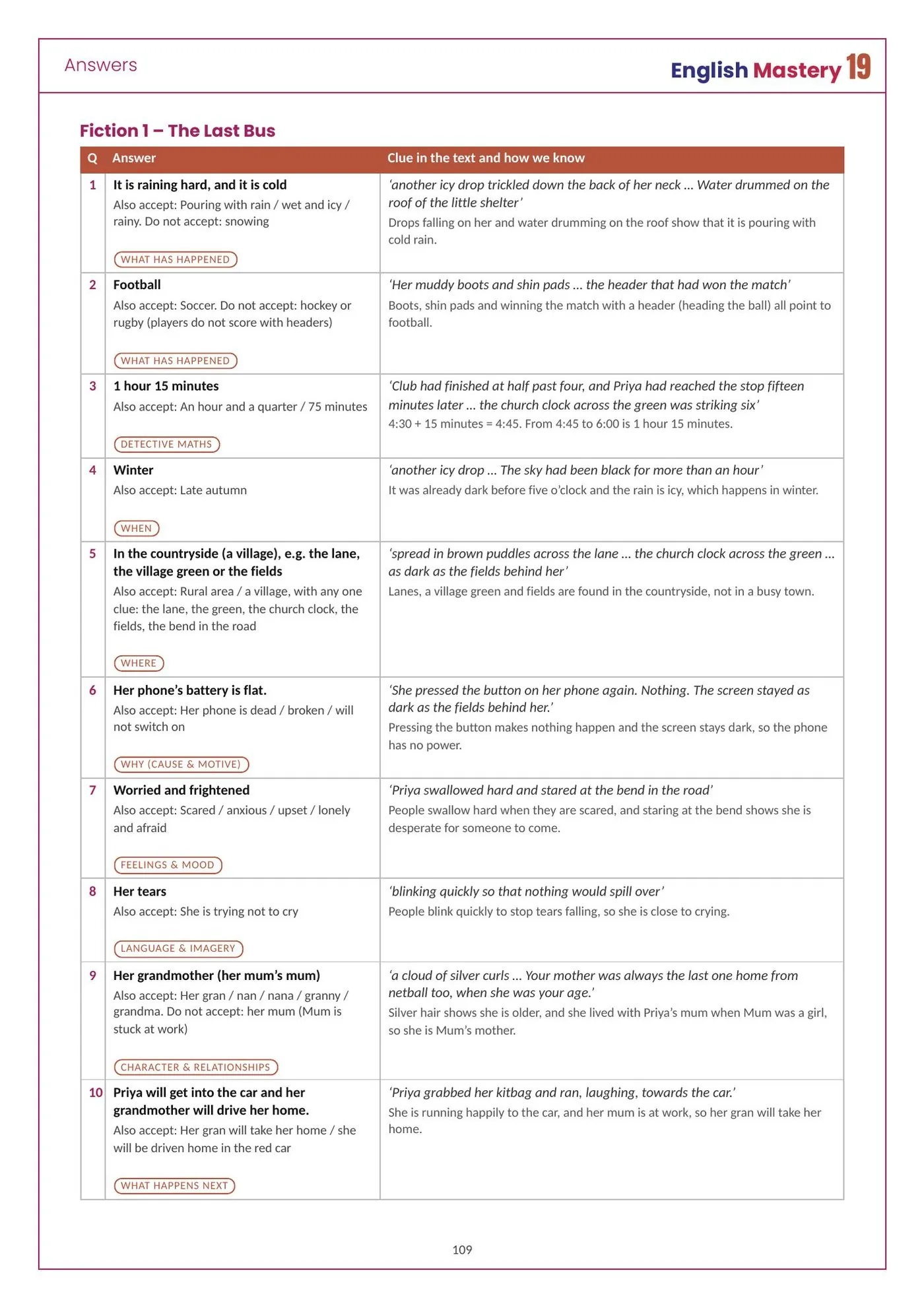
Every answer gives the clue, how we know, what else to accept, and what not to.
"3. 1 hour 15 minutes. Also accept: an hour and a quarter, 75 minutes." "2. Football. Do not accept hockey or rugby: players do not score with headers." Each answer is tagged with its question type, so a child learns which kind of inference they find hard, and a parent can mark like an examiner.
All 50 drills in the book follow the pattern shown here.
Other Year 4 books in English Mastery

Vocabulary 1
The first word list: each word with a child-friendly meaning, synonyms, antonyms and a sentence.

Vocabulary 1 Testbook
Tests every word in Vocabulary 1 the way the exam does.

English Rules 1
Grammar and punctuation rules taught one at a time, with examples a child can copy.

Vocabulary 2
992 words in 25 alphabetical sets, with meanings, synonyms, antonyms and sentences.